SAVE ON THE AXE FINE FRAGRANCE
COLLECTION
Join our Community and Discover the Axe Effect

Join our Community and Discover the Axe Effect
Save by signing up to receive communications from Axe and other Unilever Brands about exclusive offers, product updates, and more! By signing up, you agree to our Sign-Up and Save Policy and our Privacy Notice.
We get it. This might be one of those topics you'd rather not bring up. But here you are, searching for answers, because ball sweat is one of those things every guy deals with and almost nobody talks about. It's normal. It's just biology.
If your groin feels like it's running its own sauna, let's break down what's actually going on, so you can stay fresh, cool, and confident.
Sweating is a natural function. It's your body's way of cooling down. But in the groin area, things get a bit more complicated. Sweaty testicles come down to two things: a lot of sweat glands packed into a small space, and layers of clothing with nowhere for that moisture to go.
Unilever R&D Manager Bivash Dasgupta explains that one type of sweat gland is concentrated in both the groin and the armpit. Called apocrine glands, they produce an oily sweat and switch on when your emotions do. That's why your groin area can get sweaty even when you're not overheated, like when you're taking a test or sitting through a stressful meeting.
A few everyday factors turn up the heat more than others, and they usually stack on top of each other:
Warm weather and humid air are obvious triggers. Your body sweats to cool down, and the wetness just sits there in the warm, covered groin area instead of evaporating.
Exercise raises your core temperature and gets every sweat gland firing, groin included. A gym session or a long walk in jeans, either one brings on that same damp feeling.
Ever notice how you start sweating when you're nervous? That's your apocrine glands kicking in, and it's exactly why a stressful moment can leave you damp down there with zero activity involved.
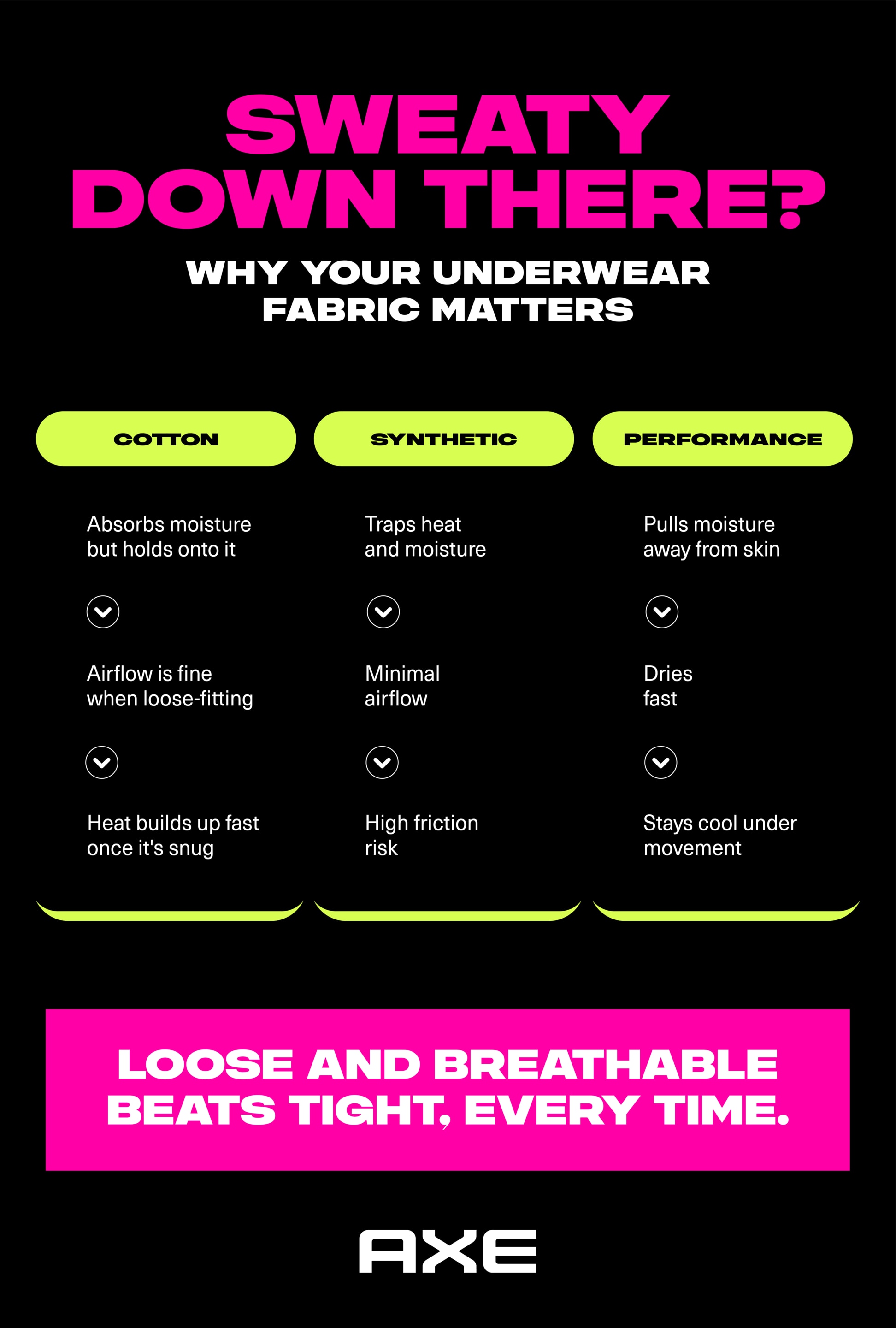
Snug underwear, compression gear, and skinny jeans trap heat and block airflow, turning a normal amount of sweat into a wet situation. Synthetic fabrics tend to trap more heat and moisture than natural fibers do.
Hormonal shifts, like those in puberty, change how active your apocrine sweat glands are. It's one reason groin sweat can feel more noticeable at certain times of your life without anything being wrong.
None of this means you're stuck being damp all day. If you're wondering how to avoid sweaty balls altogether, a few small changes make a real difference.
Loose-fitting, breathable underwear made from cotton or a moisture-wicking fabric gives sweat somewhere to go instead of trapping it against your skin. Save the tightest gear for the gym. The same fabric choices that help with managing butt sweat apply here too, since both areas deal with the same heat and friction problems.
Staying hydrated helps your body regulate temperature more efficiently, which can mean less overall sweating on a hot day. It sounds backwards to drink more water to sweat less, but a properly hydrated body just runs better, so it helps to know the signs you need hydration regardless of the weather. These signs can include feeling really tired or having more B.O. than usual.
Shower regularly and make sure to dry the groin area thoroughly afterward. Dampness left behind just gives bacteria exactly what they need to build up odor. A scented body wash that cleanses sweat and odor does more of the work than a quick rinse alone.
Managing overall sweat and body odor means keeping your pits protected too. Look for a long-lasting antiperspirant and always apply it to clean, dry skin so it works like it should. Going over old sweat or product is just asking for irritation and buildup.
An unscented, talc-free powder absorbs extra moisture throughout the day and cuts down on chafing as a bonus. Apply it after your shower, once your skin is completely dry, for the best results.
Most groin sweat is just biology doing its job a little too enthusiastically. Every so often, though, it's worth a second look. If you notice sweating that's excessive, disrupts your daily life, or comes with night sweats, don't try to fix it with your grooming routine.¹ See your doctor, who can figure out what's going on and talk you through the treatment options.
Yes. Your groin has many sweat glands, and the area is usually covered, so it can get sweatier than other parts of your body. What's really going on is more sweat, more moisture buildup and zero evaporation. It's not a sign that anything is wrong.
No, skip it. Deodorants, antiperspirants, and body sprays are not formulated for the groin, and using them there can cause irritation. A daily shower and wearing breathable underwear do the job safely instead.
Products like antiperspirants reduce how much you sweat. Odor-control products, like deodorants reduce odor but don't affect how much you sweat. For ball sweat, a daily shower with a good body wash keeps things fresh and clean all over.
Normal ball sweat is just moisture. Jock itch is a fungal infection that shows up as an itchy, red rash, and often has a musty odor² It needs antifungal treatment, not just a change in routine. If the skin in your groin area looks like it's reacting to something, it's best to see your doctor. They can check if it's jock itch or something else.
Groin sweat is just biology, not a grooming failure. A few small adjustments, wearing breathable clothing and workout gear, a proper wash, and a bit of powder, are usually all it takes to stay drier and more comfortable no matter what the day throws at you.
Related Products
RELATED ARTICLES