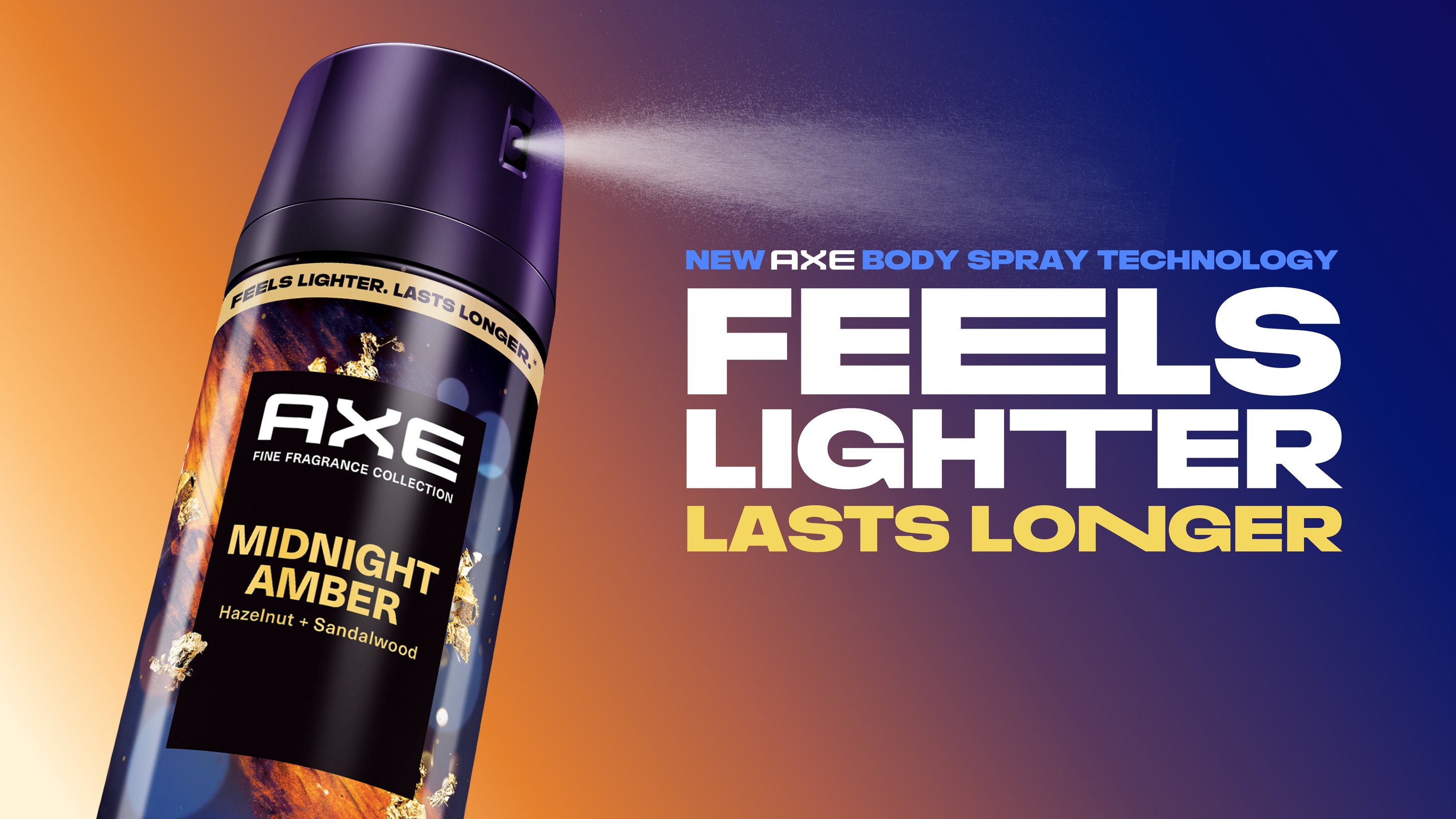
SAVE ON THE AXE FINE FRAGRANCE
COLLECTION
Join our Community and Discover the Axe Effect

Join our Community and Discover the Axe Effect
Save by signing up to receive communications from Axe and other Unilever Brands about exclusive offers, product updates, and more! By signing up, you agree to our Sign-Up and Save Policy and our Privacy Notice.
Stress Awareness Month highlights the many ways being under pressure can affect your body—including how you sweat. Normally, your body produces sweat to cool you down after exercise or when temperatures rise. But stress sweat is different. It tends to show up when you're dealing with tension or strong emotions. Sometimes, it can leave you drenched at the worst possible moment.
Here’s the thing: stress sweat is normal. Once you understand it, managing it becomes much easier.
When stress and sweating collide, it’s not just about how much you sweat—it’s about what that stress sweat contains. That’s what makes the odor stronger and more noticeable.
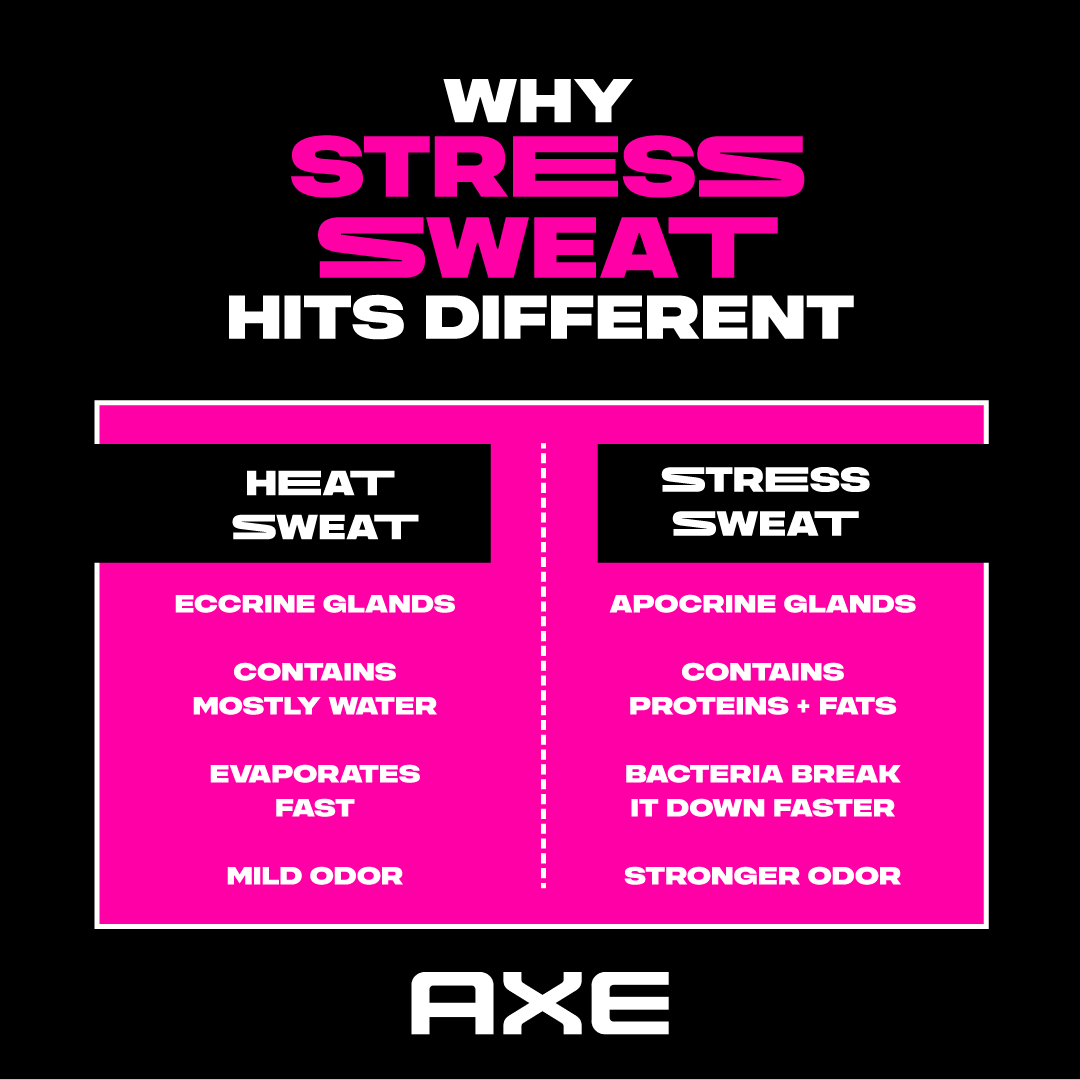
The key difference has to do with the glands behind the two types of sweat. Heat or workout sweat mainly comes from eccrine glands, which are spread across the body. They produce a watery sweat that evaporates quickly and helps to cool you down.
Stress sweat, on the other hand, is produced by apocrine glands located mainly in the underarms and groin. This type of sweat contains more proteins and fats, which skin bacteria break down more quickly.
It all comes down to the chemistry of stress sweat, and your hormones play a key role in triggering your body’s adrenaline response. “Stress sweat is biologically different from normal sweat, controlled by the sympathetic nervous system,” explains R&D scientist at Unilever, Matt Annecharico. “When adrenaline or heart rate rises, the body releases sweat that contains lipids and proteins that bacteria naturally found on the skin feed on, which results in a stronger odor.”
Put simply: richer sweat gives bacteria more to feed on—and once they get busy, odor can show up fast.
Feeling tense can make sweat appear even when you're not physically active. That’s because your body is wired to react instantly under pressure, activating a rapid survival response to prepare you for action. This response signals your sweat glands to start working, which is why stress sweat can kick in so quickly.
"Sweat can appear even when someone isn’t hot or physically active because sweating is controlled by the autonomic nervous system, not just body temperature,” explains R&D Manager at Unilever, David Waters.
High-pressure moments like presentations, job interviews, or first dates are classic triggers when stress and sweating can ramp up.
When odor increases, it’s not that your routine’s stopped working—it’s your body hitting the stress and sweating response throughout the day. The more often this happens, the faster odor can build. And because stress sweat smells stronger than regular sweat, your deodorant may fade more quickly.
Areas like the underarms naturally trap heat and wetness, creating the perfect environment for odor to develop. Clothing can also make things worse: tight or non-breathable fabrics hold onto moisture.
Sweat mixes with oil, environmental particles, and leftover product on your skin. Together, they create the perfect setup for odor. While your deodorant or antiperspirant do a lot of the heavy lifting, managing stress sweat doesn’t start there. It actually starts in the shower.
A solid daily shower routine paired with a body wash helps remove all of this, giving you a clean base that keeps stress sweat under control.
While both traditional soap and body wash get your skin clean, body washes go a step further. They help remove sweat, oil, and odor-causing bacteria without leaving your skin dry, and their lather spreads easily across areas where stress sweat tends to build up the most. Take the time to cleanse thoroughly.
When life throws stressful curveballs, the right product can make all the difference in keeping you dry and fresh. Let’s discuss deodorants vs. antiperspirants because they do different jobs.
“A deodorant’s primary function is to reduce body odor while an antiperspirant reduces sweat,” explains R&D Manager at Unilever, Jamie Regan. “A deodorant can reduce odor by absorbing or masking it, while an antiperspirant works by creating a barrier to sweat production.”
On low-pressure days, deodorant might be enough. But for high-stress situations, an antiperspirant is the better choice because by reducing sweat, it also helps reduce odor at the same time.
Every person sweats differently, so consider whether you’re a light or heavy sweater when choosing your product.
Most antiperspirants are designed to last several hours—some even up to 48 hours. But movement, clothing, and high-pressure moments can all affect how long your protection lasts. When coverage starts to fade, a quick reapply can help refresh your protection.
Managing stress sweat is not only about the products you use. A few simple habits can keep you comfortable and fresh throughout the day:
Stress sweat can feel harder to manage because it tends to ramp up unexpectedly and smell stronger.
Yes. Because stress sweat smells stronger, your regular deodorant might not be enough. That’s when an antiperspirant is a better pick.
That depends on how long sweat stays on your skin or your clothing. When moisture sits longer, bacteria have more time to interact with it and cause odor.
A few small adjustments can make a big difference. Daily showers, using an antiperspirant, and changing out of sweaty clothes can help you stay comfortable.
Stress sweat isn’t locked to one time of day—it shows up whenever your stress response turns on, but mornings and high-pressure moments like interviews or first dates are when many people notice it most.
Stress sweat happens to everyone. It’s your body’s response to tension, emotions, and hormones, which can make odor stronger and appear even during everyday moments. With the right products and a few simple tweaks, you can stay ahead of stress sweat and keep odor in check.
Related Products
RELATED ARTICLES